Meet Corvin Codirla, Hedge Fund Partner at Partner Capital
08 April 2015 ‹ view all postsGiven that your background is in Physics/Mathematics, when did you first become interested in financial markets? What was the catalyst?
The movie Wall Street was my first view on the stock market. I later became interested in games like poker and blackjack, as well as backgammon. Most of these are probabilistic with a heap of intrinsic psychology. The boom years of 1998-2000 then brought the focus back onto the Markets, with entire departments at Cambridge actively speculating.
What is incredibly fascinating is that the Markets provide the quickest path from ideas to cash creation in our capitalist society.
What is an average day like for you?
The average day is focused on research and programming, as we are a systematic fund. We start the research with a heuristic formulation of rules, the idea here is that the human eye tends to be very good at distilling patterns. You need a computer to then validate the statistical significance. However, we don’t just throw the computer at the price series and expect to come up with a set of random rules, which are over-fitted to the price history.
Otherwise, a fund is like just another business, requiring focus on auditors, compliance, lawyers, marketing, accounting, etc.
What instruments do you trade the most and why?
For the fund: spot FX. Personally, the number of instruments extends to futures, equities and options.
Hedge fund managers are famous for their so called “process”. Could you please describe yours?
For a systematic fund the process revolves around decomposing historical patterns into their most rudimentary signals and checking if they are significant or not. But that is only half the job. The other half focuses on finding methods of determining confidence of continued performance. The financial markets are ever changing, and no signal, without the right analysis, will work forever.
How do you control your risk?
At the risk of being flippant: stop-losses. This means hard pre-determined stops, which don’t get widened out. Many people will use soft stop-losses, which mark discussion points for how to take the position forward. The truth is, an exit strategy must be devised prior to entering the position. In the midst of the heat it’s too difficult to take a decision, and one usually just freezes up, like a deer in headlights. Any loss is easy to take, if the position is taken out by a predetermined stop-loss.
Fundamentals vs. technical: what’s more important for you?
Both. Though the fund is quantitatively driven, I personally do analyse fundamentals. There is an easy argument to be made here, at least for the fundamental group of assets: given the long-term macro growth policies of most developed governments, the purchase of commodities, debt, and equity should partake in this growth. Fundamental analysis therefore occupies itself with business cycle determination. It’s not the most precise of sciences, however, goods prices are sticky enough, and policy change takes long enough to transmit through the social fabric that catching “the wave” is possible. Taking macro views on the back of this is profitable.
Tell us some major trading mistakes you have made and what you have learned from them.
The mistakes are the usual ones: overtrading, no stop-losses, overleverage. By fixing each of these, longevity in the markets and catching the big trade is drastically increased.
In your opinion, are we seeing the end of the 5-6 years bull market?
No. We’re only at the start of something major. On an inflation adjusted basis we’re only getting back to flat from the 2000 collapse! And we know that in Equity markets, breach of previous multi-year highs leads to big bull markets. Furthermore, the amount of money that has been pumped into the system via QE and loose monetary policy still needs to trickle into the real economy, which will provide another big boost. If you also take into account a persistent 18 year cycle in bull and bear markets in Equities, 2018ish should provide a starting point for another big move to the upside. I’m not saying that it’s going up in a straight line, there will be corrections to be had, and most corrections in the last 4 years have been only of the order of 10%, which for a 200% increase since 2009 is nothing. However, we won’t face the massive collapse that people are so fond of pointing to. I’m referring here to the US market primarily.
Tell us about a potential trading opportunity you are currently focused on at the moment.
A continued US Dollar rally in the currency markets
How do you relax?
Sports, in particular body-weight exercises and running
Kids nowadays are working extremely hard and disregarding the importance of a healthy work/life balance. What’s your advice to them and how do you find balance between work and your family?
Perspective. Always remember that when you’re 90 lying on your deathbed, you’re not going to remember the number of hours you spent in the office, or the number of trades you got right, or the number of deals you were successful on. You’ll remember the meaningful events in life that touched you. Things that can never be repeated. Those things are pretty obvious.
What would be your advice for someone who is looking to break into the hedge fund world?
Trade your own money and learn from your mistakes. There are not many markets you cannot trade on your own account. Those you can’t such as the Rates OTC market, are probably not worth trading from a proprietary point of view any way.
What’s the best piece of advice that has been given to you?
Throughout my career I’ve seen it happen over and over again: people make silly mistakes, which can lead to huge financial implications. The best advice has been: you don’t get remembered for how quickly you solve a problem or deliver a solution, but how well that solution works out. All time pressure is an illusion, so always take your time. That doesn’t mean be scared to pull the trigger, at some point you’ll have to take a decision, but don’t take it in a vacuum.
When growing up, you wanted to become:
The first man on Mars.
Interviewers: Stelian Nenkov, Georgi Stanoev
COMMENTS
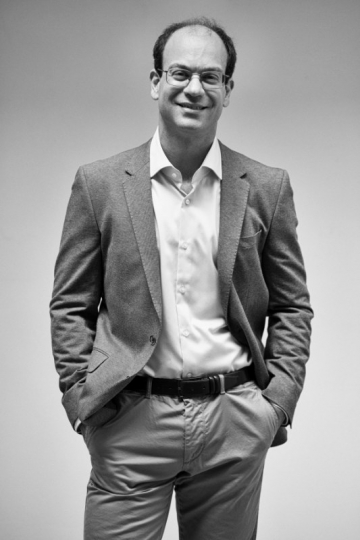
Corvin Codirla
Job title: Fund Manager
Age: 38
Nationality: German
Degree: PhD
University: Cambridge
Location: London, UK
Date: 3rd Nov 2014
Corvin Codirla
Job title: Fund Manager
Age: 38
Nationality: German
Degree: PhD
University: Cambridge
Location: London, UK
Date: 3rd Nov 2014